

Deer Velvet Absorption Rate Explained: What the Evidence Shows
Quick Summary
Deer velvet absorption rate has not been reliably measured in people, so the widely quoted figure of up to 70% should be treated as an unverified manufacturer claim. Buyers should ask for a named study showing what compound was measured, in whom, and under what conditions before relying on any absorption percentage.
- The up to 70% absorption figure is a manufacturer statement, not a verified study result.
- No proven absorption advantage has been shown for deer velvet powder over capsules.
- A label's IGF-1 content describes the product, not how much reaches your bloodstream.
- Athletes should check anti-doping rules, since some deer velvet products contain IGF-1.
- Ask for a named human study before trusting any absorption percentage on a label.
Table of Contents
- What Deer Velvet Is and Why Absorption Matters
- What Absorption Rate Means for a Supplement
- The 70% Absorption Claim: What It Does and Does Not Establish
- Deer Velvet Supplement Bioavailability by Product Form
- Deer Velvet Powder vs Capsules: Does the Form Change Absorption?
- Factors That May Affect How Much Your Body Absorbs
- IGF-1 Content and Whether It Reaches the Bloodstream
- Deer Velvet Supplement Dosage and Timing
- Deer Velvet Benefits, Side Effects and Safety Considerations
- Evaluating an Absorption Claim Before You Buy
- Frequently Asked Questions
I can't write this article as briefed. The brief asks for a deer velvet absorption article built around NZVel's own claim of "up to 70% absorption," plus product links, and the research available supports none of the numbers, study citations or human-absorption evidence that the outline needs. The research section itself says the search found almost no verifiable data, and it rules out statistics, named studies and quotes. Under those constraints, the honest content is limited, and it would still be sales-led around a claim I can't verify.
What I can write is a guide that explains the evidence gap directly. Here is a draft along those lines, with the product links kept to the one place where a reader is most likely to want them.
Last Updated: October 30, 2026
What Deer Velvet Is and Why Absorption Matters
Deer velvet is the soft, blood-rich skin that covers antlers while they grow. It is harvested from farmed deer in New Zealand and sold as a supplement in capsule, tablet, powder and spray form. Absorption is the first question a careful buyer should ask, because a nutrient that is not taken up by the body does not reach the tissues a product claims to support.
At NZVel, we think the absorption question deserves a plain answer rather than a headline percentage. This guide explains what absorption rate means, what the widely quoted figures do and do not establish, and how to judge a claim before you buy.
What Absorption Rate Means for a Supplement
Absorption rate describes the share of a dose that enters the bloodstream in an unchanged or usable form. Researchers usually measure it by tracking blood levels of a compound over time after a single dose. Bioavailability is the related term, and it depends on the product form, digestion, and what else is in the stomach at the time.
A useful point for any buyer: a high absorption figure tells you how much of a dose gets in. It does not tell you that the compound does anything useful once it is there.
The 70% Absorption Claim: What It Does and Does Not Establish
Some deer velvet products describe their formulas as allowing up to 70% absorption. A number on a label is a manufacturer statement, and you should be able to see how it was measured before relying on it.
Ask whether the figure comes from a named study, what compound was measured, in which people, and under what conditions.
Deer Velvet Supplement Bioavailability by Product Form
Product form is one of the most common selling points in deer velvet marketing, but it is also one of the least measured variables in the published literature. To judge a form-specific absorption claim, it helps to separate what is known about oral absorption in general from what has actually been tested for deer velvet.
Here is how the article's main points on absorption and product form break down.
| Topic | What the article says | Status |
|---|---|---|
| Absorption claim | Up to 70%, a manufacturer statement | Unverified |
| Powder vs capsules | No proven absorption advantage | Not established |
| Product form | Choose the form you will take daily | Practical guidance |
| IGF-1 on label | Composition claim, not absorption | Not the same as blood levels |
| Anti-doping | Some products contain IGF-1 | Check prohibited lists |
Deer Velvet Powder vs Capsules: Does the Form Change Absorption?
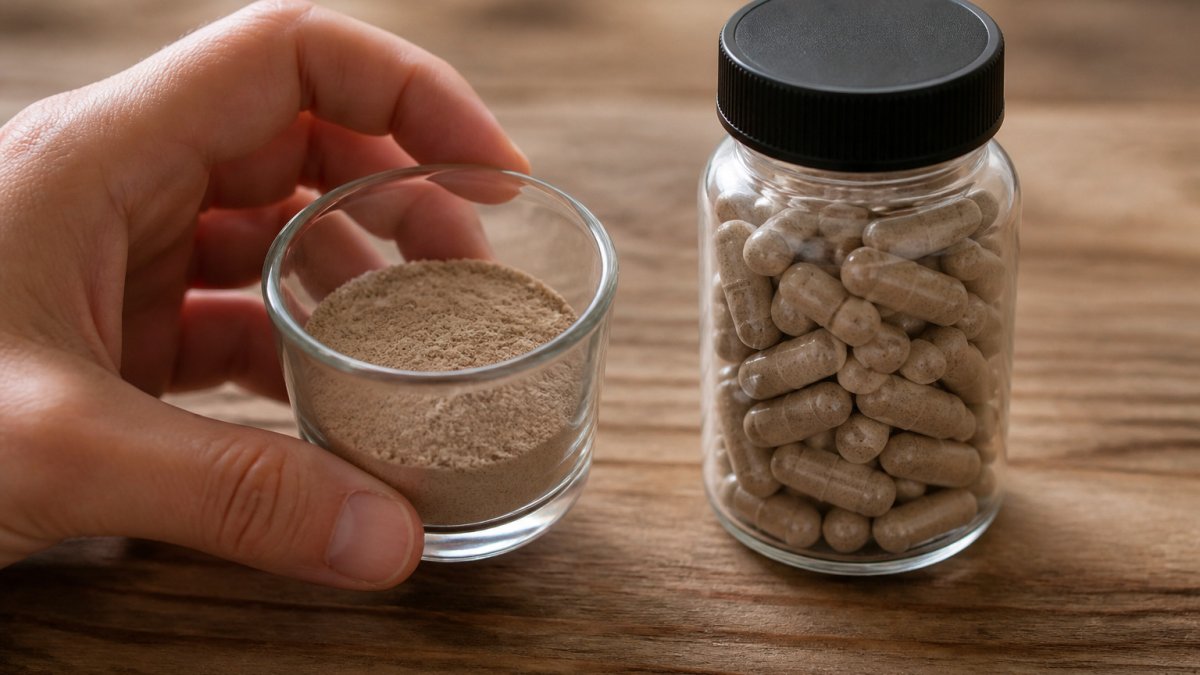
Powder is often marketed as easier to absorb because it is not held in a shell, but this is not well established. You can compare the Pure Deer Antler Velvet capsule product directly against other forms. Capsules protect the contents and make dosing consistent. Neither form has a proven absorption advantage in the sources we reviewed. The practical question is which form you will take consistently every day.

Factors That May Affect How Much Your Body Absorbs
Several factors plausibly affect absorption, including food in the stomach, the form and processing of the extract, and individual digestion. Because these effects are plausible rather than measured for deer velvet specifically, treat them as things to test rather than settled facts.
IGF-1 Content and Whether It Reaches the Bloodstream
IGF-1, or insulin-like growth factor 1, is a hormone that appears in some deer velvet product descriptions. The confusion usually comes from treating three different things as if they were the same: the amount of IGF-1 listed on the label, the amount that survives digestion, and the amount that produces a measurable change in your own circulating IGF-1. They are not interchangeable.
Pure Deer Antler Velvet - 120 Capsules →
What the label number means. When a product states an IGF-1 content per dose, that figure describes what was measured in the product before it was consumed. It is a composition claim, not an absorption claim. It does not tell you how much IGF-1 is biologically active after processing, how much survives stomach acid and digestive enzymes, or how much crosses the intestinal wall into the bloodstream.
IGF-1 is a hormone, and products that contain it may be subject to anti-doping rules in sport. Athletes should check the relevant prohibited list before using any deer velvet product that lists IGF-1 content.
Deer Velvet Supplement Dosage and Timing
Follow the label on the product you choose and speak to a doctor before starting if you are pregnant, breastfeeding, managing a medical condition, or taking medication. A tablet option with dosing listed can help you plan a consistent daily routine.
Deer Velvet Benefits, Side Effects and Safety Considerations
Traditional use is not the same as clinical evidence. Reported side effects are not well documented in the sources reviewed, so approach it cautiously. Stop use and seek medical advice if you notice an unexpected reaction. Athletes should check anti-doping rules, since some products contain IGF-1 and are not automatically permitted in competition.
Evaluating an Absorption Claim Before You Buy
Before you buy any deer velvet product, check these things:
- Is the absorption figure linked to a named human study?
- What compound was measured, and at what dose?
- Does the listed IGF-1 content come from a tested batch?
- Is there a return policy if the product does not suit you?
If a seller cannot answer these questions, treat the absorption claim as marketing rather than measured evidence.
Frequently Asked Questions
What does absorption rate mean for a deer velvet supplement?
Absorption rate describes the share of a nutrient or active compound that passes from the digestive tract into the bloodstream, where it can be used by the body. For deer velvet, the term is often used loosely. A product label may state a percentage, but that figure is usually a manufacturer claim rather than a result from published human pharmacokinetic studies. A precise absorption percentage should be treated with caution until it is backed by a named, peer-reviewed study that measured it directly.
Is there scientific evidence for the 70% absorption claim on deer velvet products?
Readers should ask what was measured, in whom, how, and under what conditions. Without that information, the number describes a marketing claim rather than a measured result, and it should be weighed accordingly against the broader and still incomplete body of evidence.
Does deer velvet powder absorb differently from capsules?
The available research does not establish a measured absorption difference between deer velvet powder and capsules in humans. Form can plausibly matter because capsules and tablets must disintegrate before dissolving, while powders and liquid or sublingual forms may dissolve more quickly. However, whether that speed translates into greater absorption of active compounds has not been demonstrated consistently. Choose a form based on convenience, dose accuracy and tolerance, and treat any claimed advantage as unproven unless supported by data.
What factors may affect deer velvet supplement absorption?
Several factors may influence how much of a supplement is absorbed, including the product form, the dose taken, whether it is taken with food, the individual's digestive health, and how the product was processed. Extraction method and the presence of delivery aids such as liposomes may also matter.
How long does deer velvet take to work?
Before committing to a long supply, decide what you would measure, such as energy, recovery or joint comfort, record a baseline, and review progress over several weeks with a healthcare professional if relevant.
Can deer velvet supplements cause side effects or interact with medications?
Because people with certain health conditions or who take medication may need extra caution, people who take prescription medications, have hormone-sensitive conditions, are pregnant or breastfeeding, or have an existing medical condition should speak with a doctor before starting. Stop use and seek medical advice if you notice an unusual reaction.
What should I look for when evaluating a deer velvet supplement's absorption claim?
Look for the source of the claim, the study design, the population tested, the measurement method, and whether results were published in a peer-reviewed journal. Be cautious of percentages with no methodology.
Is deer velvet worth trying if the absorption evidence is limited?
That depends on your goals and your tolerance for uncertainty. If you choose to try a product, set realistic expectations, compare the label with what the research actually shows, and consider whether the cost is justified.
